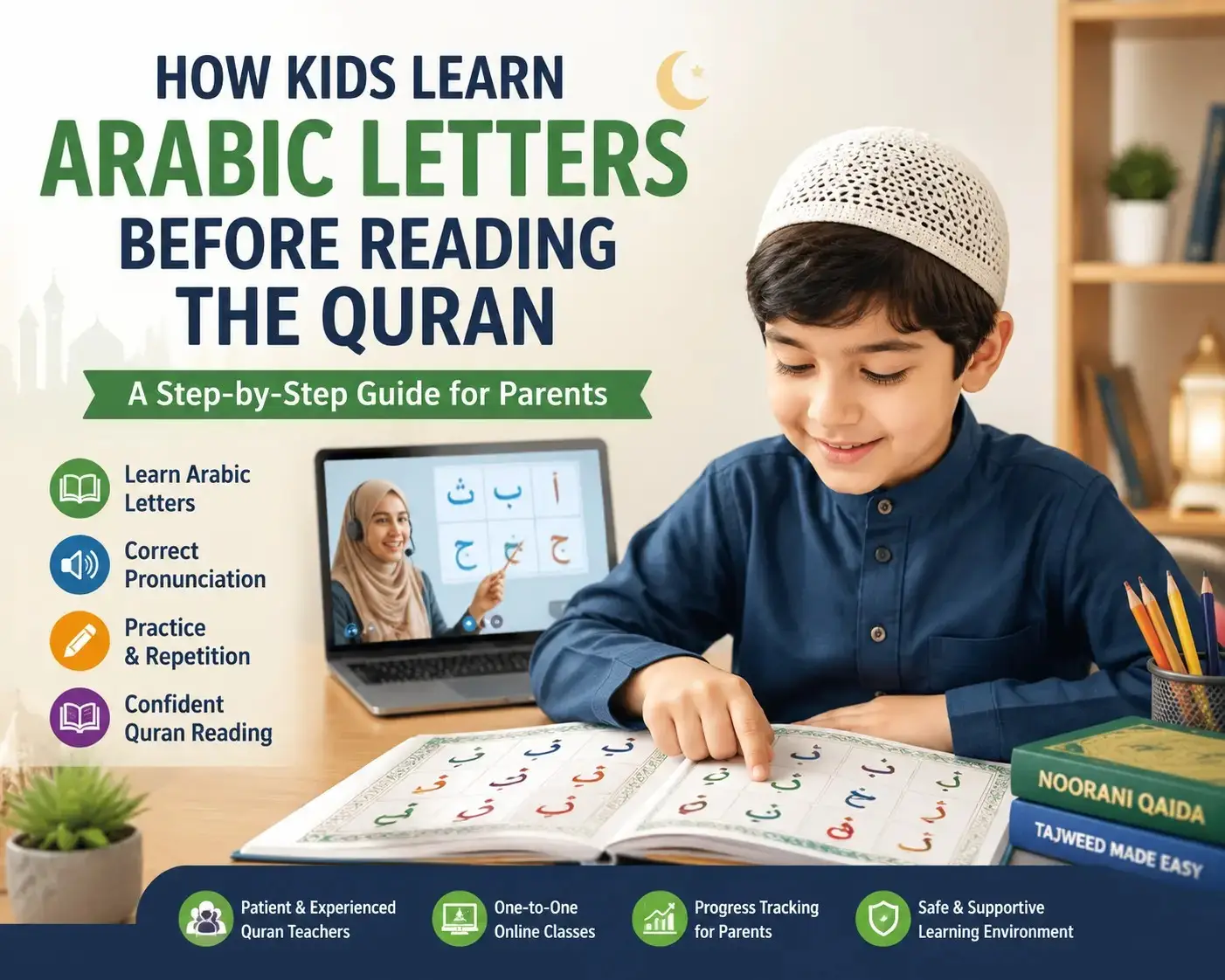
How Kids Learn Arabic Letters Before Reading the Quran: A Step-by-Step Guide for Parents
Learning the Quran is one of the most beautiful journeys a Muslim child can begin. Before children can read the Holy Quran confidently, they first need to recognize and pronounce the Arabic letters correctly. Just as children learn the English alphabet before reading books, they also need to learn the Arabic alphabet before reading the Quran.
Many parents wonder how to teach Arabic letters for kids in a simple and enjoyable way. Some children learn quickly, while others need more time and practice. The key is to build a strong foundation instead of rushing into Quran reading. When children understand the Arabic alphabet, they find it much easier to read Quranic words with confidence and correct pronunciation.
At our academy, we help children learn Arabic letters through interactive one-to-one lessons, experienced Quran teachers, and a step-by-step learning method. Every lesson is designed according to the child’s age and learning ability, making Quran education simple, enjoyable, and effective.
Why Children Should Learn Arabic Letters Before Reading the Quran
Many parents are excited to help their children start reading the Holy Quran. However, skipping the basics often makes learning more difficult later. Before reading Quranic verses, children should first become familiar with the Arabic alphabet for children, its sounds, and the correct pronunciation of every letter.
Every Arabic letter has its own sound and pronunciation. Some letters may sound similar to children who are learning for the first time, so patient guidance and regular practice are essential. Once children recognize each letter confidently, they can begin joining letters to form words and eventually read complete Quranic verses.
This step-by-step approach reduces confusion, improves confidence, and helps children develop a stronger connection with Quran learning from the very beginning.
Understanding the Arabic Alphabet
The Arabic alphabet contains 28 letters, and each letter has a unique pronunciation. Unlike English, Arabic letters may change their shape depending on their position in a word. Children do not need to memorize everything at once. Instead, they learn one letter at a time through repetition, listening, and reading practice.
Experienced teachers introduce letters in a child-friendly way using visual learning, pronunciation practice, and interactive activities. This makes it easier for children to remember each letter while enjoying the learning process.
Parents searching for learn Arabic alphabet online often want lessons that are simple and engaging. Online one-to-one classes allow teachers to focus on each child’s progress, correct pronunciation mistakes immediately, and encourage children throughout every lesson.
How Noorani Qaida Helps Children Learn Arabic Letters
One of the best ways to teach Arabic letters before Quran reading is through Noorani Qaida. It is a beginner-friendly book that introduces children to the Arabic alphabet in a structured and easy-to-follow way.
Instead of asking children to read the Quran immediately, Noorani Qaida teaches them how to recognize letters, pronounce sounds correctly, join letters together, and understand basic reading rules. As children progress, they also learn Harakat such as Fatha, Kasra, and Damma, which help them read Arabic words correctly.
Learning Noorani Qaida first builds confidence and prepares children for reading the Holy Quran with proper Tajweed. It also reduces common reading mistakes and makes future lessons much easier.
A Simple Step-by-Step Method to Learn Arabic Letters
Children learn best when every lesson builds on the previous one. A clear and structured learning method helps them stay motivated and understand new concepts without feeling overwhelmed.
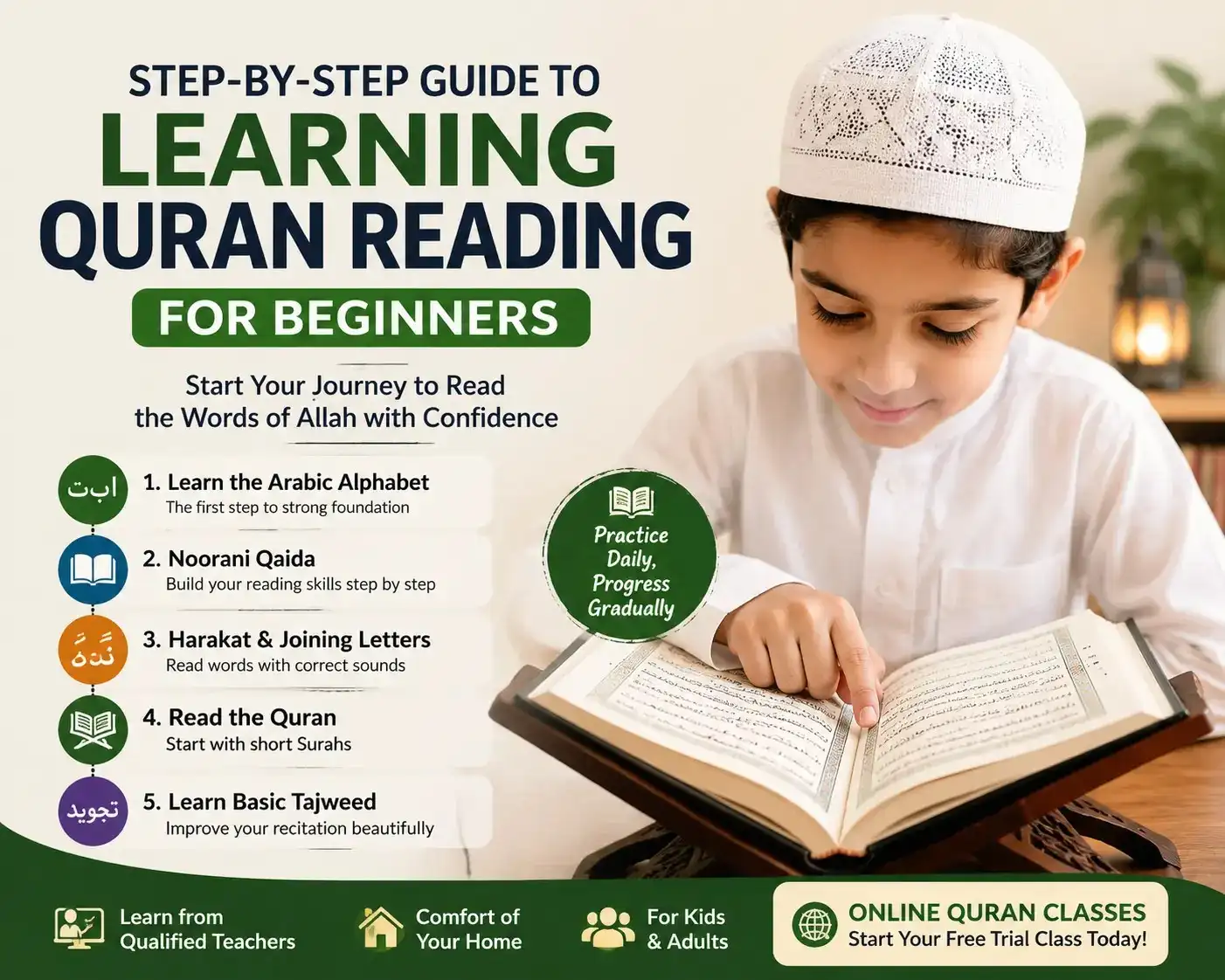
The journey usually begins by recognizing individual Arabic letters and listening carefully to their sounds. Once children can identify the letters, they practice saying them aloud with their teacher until the pronunciation becomes clear.
After this, students learn short vowels (Harakat), followed by joining letters to form simple Arabic words. Regular reading practice, revision, and gentle correction help children improve naturally. As their confidence grows, they become ready to read short Quranic verses with correct pronunciation.
This gradual learning process makes Quran reading for beginners easier and more enjoyable because children develop the necessary skills before moving to more advanced lessons.
Common Challenges Children Face When Learning Arabic Letters
Every child learns at a different pace. Some children recognize Arabic letters within a few weeks, while others need more practice before they feel confident. This is completely normal. The goal is not to finish quickly but to build a strong foundation for reading the Holy Quran correctly.
One of the biggest challenges is remembering letters that look similar. For example, some Arabic letters have the same basic shape but different dots. Young learners may also find it difficult to pronounce letters that do not exist in English. This is why listening to an experienced Quran teacher and repeating each letter several times is so important.
Another common challenge is losing interest. Long lessons or difficult teaching methods can make children feel tired. At our academy, we keep lessons interactive by using a digital whiteboard, screen sharing, reading practice, and positive encouragement. These child-friendly teaching methods help students stay focused and enjoy learning every lesson.
Parents looking for online Arabic classes for kids often choose one-to-one learning because teachers can immediately correct mistakes, answer questions, and adjust lessons according to the child’s learning style.
How Parents Can Help Their Children Learn Arabic Letters at Home
Parents have an important role in helping children succeed. Even a few minutes of daily practice can improve confidence and help children remember what they learned during class.
Instead of asking children to memorize many letters at once, encourage them to practice a few letters every day. Reading together, repeating letter sounds, and celebrating small achievements create a positive learning experience.
When children make mistakes, they should be corrected gently. Positive encouragement helps them feel confident and motivates them to continue learning. Learning the Arabic alphabet for children should be enjoyable rather than stressful.
If your child attends online Quran classes, try to create a quiet learning space with a stable internet connection and minimal distractions. This allows children to concentrate better and get the most from every lesson.
Regular communication with your child’s online Quran teacher is also helpful. Parents who understand their child’s strengths and areas for improvement can provide better support between lessons.
Why One-to-One Online Quran Classes Help Children Learn Faster
Many parents compare group classes with private lessons before enrolling their children. While both have benefits, one-to-one learning often provides a more personalized experience.
In a private class, the teacher focuses on only one student. Every mistake is corrected immediately, pronunciation improves more quickly, and children receive enough time to ask questions without feeling shy.
Students learning Arabic letters before reading the Quran often progress faster because lessons move according to their individual ability rather than the pace of a larger class. If a child needs extra practice with Noorani Qaida, the teacher can spend more time on that lesson before introducing new topics.
Parents searching for How to teach Arabic letters to kids usually want a method that is simple, effective, and encouraging. Personalized online learning gives children the confidence to read, repeat, and practice without pressure, making the entire learning journey more enjoyable.
Signs Your Child Is Ready to Start Reading the Quran
Many parents ask when their child should move from learning the Arabic alphabet to reading the Holy Quran. There is no fixed age because every child develops differently. Instead of focusing on age, it is better to look at your child’s learning progress.
A child is usually ready to begin Quran reading when they can recognize all Arabic letters, pronounce them correctly, understand basic Harakat such as Fatha, Kasra, and Damma, and join letters to read simple Arabic words. Completing Noorani Qaida with confidence is also an excellent sign that your child is prepared for the next step.
Children who build a strong foundation often find Quran reading for beginners much easier. They read with greater confidence, make fewer pronunciation mistakes, and are better prepared to learn Tajweed in future lessons.
Learning the Quran is not a race. Every small achievement brings your child closer to reading the words of Allah with confidence, understanding, and love.
Why Learning Arabic Letters Builds a Strong Foundation for the Quran
Children who spend enough time learning Arabic letters often become more confident Quran readers. They do not simply memorize words. They understand how letters connect, how sounds change, and how words should be pronounced correctly. This strong foundation makes every future lesson easier.
When children skip the basics, they may struggle with pronunciation, reading fluency, and Tajweed. They often need to go back and relearn the same concepts. Taking time to learn Arabic letters first helps children avoid these challenges and enjoy a smoother Quran learning journey.
At our academy, every lesson follows a simple and structured path. Children first master the Arabic alphabet, then practice joining letters, learn Harakat, improve pronunciation, and finally begin reading the Holy Quran with confidence. This step-by-step approach helps students progress naturally without feeling overwhelmed.
Start Your Child’s Quran Learning Journey with Confidence
Every child deserves the opportunity to learn the Quran in a way that is simple, enjoyable, and meaningful. A strong understanding of Arabic letters for kids is the first step toward reading the Holy Quran with confidence and correct pronunciation.
Whether your child is just beginning with the Arabic alphabet for children or is ready to move beyond Noorani Qaida, choosing the right teacher can make a lasting difference. Experienced teachers provide patient guidance, regular revision, and positive encouragement that helps children develop both Quran reading skills and a love for learning.
Our one-to-one online Quran classes are designed to help children learn at their own pace through interactive lessons, qualified teachers, and a supportive learning environment. Every lesson focuses on building confidence, improving pronunciation, and preparing children for successful Quran reading.
If you are looking for a trusted way to learn Arabic alphabet online or want your child to start reading the Quran with proper Tajweed, we are here to support your family every step of the way.
Book your three free trial classes today and discover how a strong foundation in Arabic letters can help your child become a confident Quran reader.
Frequently Asked Questions
At what age should children start learning Arabic letters?
Most children can begin learning Arabic letters from around 3 to 5 years of age, depending on their attention span and readiness. Starting with simple lessons and Noorani Qaida helps children build a strong foundation before reading the Holy Quran.
How long does it take for kids to learn the Arabic alphabet?
Every child learns at a different pace. With regular practice and guidance from an experienced online Quran teacher, many children recognize the Arabic alphabet within a few months. Consistent revision and daily practice help children learn more confidently.
Is Noorani Qaida the best way to learn Arabic letters before reading the Quran?
Yes. Noorani Qaida is one of the most effective beginner resources because it teaches children the Arabic alphabet, pronunciation, Harakat, and letter joining in a simple, step-by-step way. It prepares students to read the Holy Quran with greater confidence and accuracy.
Can children learn Arabic letters through online Quran classes?
Yes. Modern online Quran classes make learning Arabic letters easy and interactive. Experienced teachers use one-to-one lessons, digital whiteboards, screen sharing, reading practice, and regular revision to help children learn from home in a structured and enjoyable way.
How can parents make learning Arabic letters easier at home?
Parents can support their children by setting aside a few minutes each day for revision, listening to letter sounds together, encouraging regular reading practice, and celebrating small achievements. A positive and consistent routine helps children stay motivated and strengthens what they learn during their online Quran lessons.