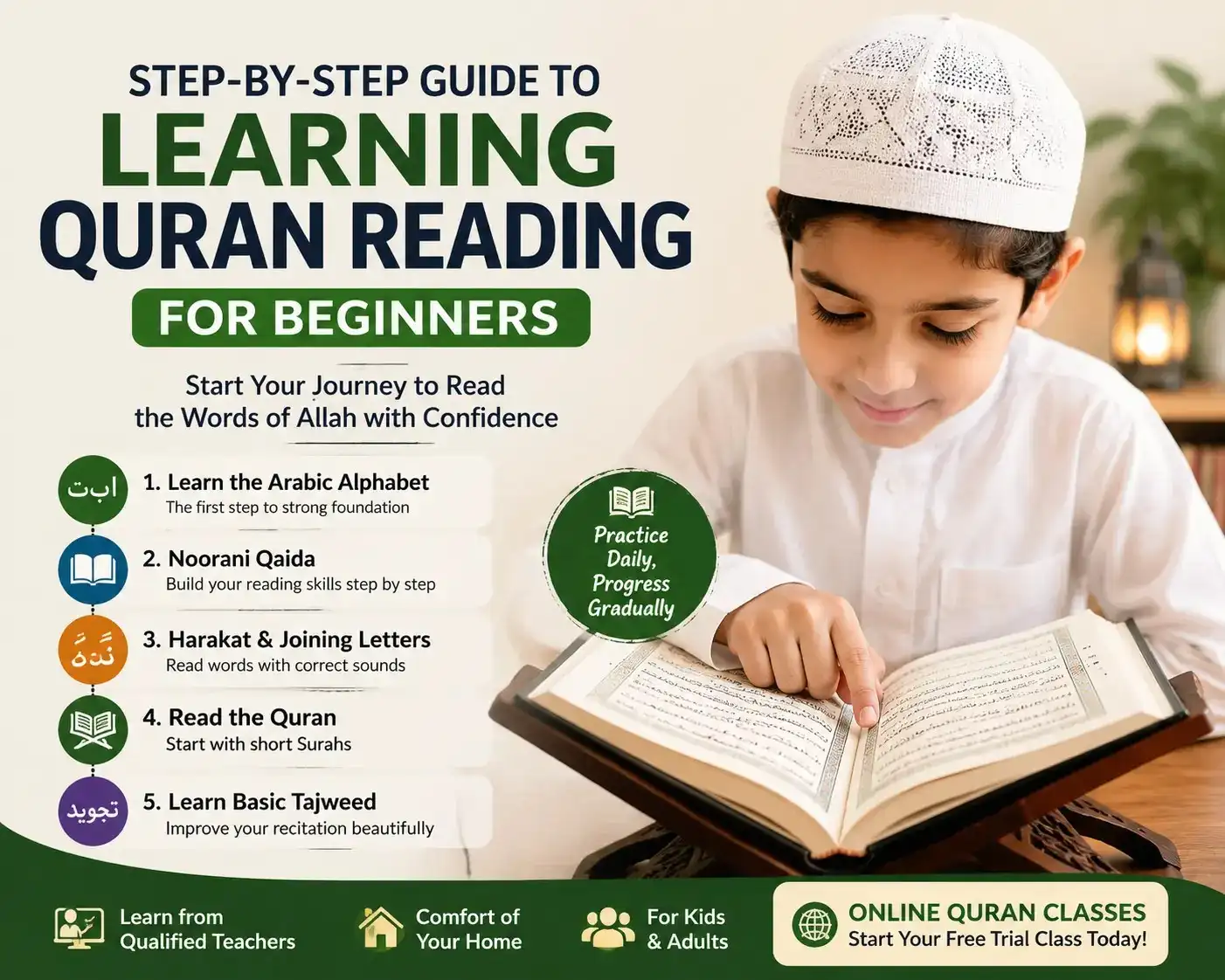

Why Tajweed is Important for Every Muslim Child
Learning to read the Quran is one of the most meaningful parts of a Muslim child’s early education. Children may begin by learning Arabic letters, joining them into words, and reading short verses. But knowing the letters is only the beginning. A child also needs to learn how those letters should sound when reciting the words of Allah.
This is why Tajweed is important for every Muslim child. Tajweed teaches children to pronounce Quranic letters correctly and follow the rules of Quran recitation. It helps them understand how different letters are produced, when sounds should be extended, where certain sounds are held, and how to stop or continue during recitation.
Tajweed does not need to feel difficult for a young learner. When children are taught gradually, they can learn one rule at a time through listening, repetition, and guided reading. These small steps can help them develop accurate pronunciation without making Quran lessons stressful.
For parents, teaching Tajweed is not only about improving a child’s reading skills. It is also about helping children approach the Quran with care, attention, and respect.
What Is Tajweed in Quran Recitation?
Tajweed is the set of rules used to recite the Quran correctly. It helps a reader give each Arabic letter its proper sound and observe the characteristics that affect Quranic pronunciation.
Arabic contains several sounds that may be unfamiliar to children who speak English, Portuguese, or another language at home. For example, some Arabic letters come from parts of the throat, tongue, lips, or mouth that children may not normally use when speaking their everyday language.
A Tajweed teacher helps children recognize these differences through listening and practice. Instead of simply telling a child that a sound is incorrect, the teacher can demonstrate the correct pronunciation and allow the child to repeat it.
As children become more familiar with Quranic Arabic, they also begin learning rules such as Madd, Ghunna, Qalqalah, Noon Sakinah, Tanween, and Meem Sakinah. These concepts can be introduced according to the child’s age and reading level rather than all at once.
The purpose of Tajweed is therefore practical: to help children recite the Quran accurately and develop better control over their pronunciation.
Why Should Children Learn Tajweed From an Early Age?
Children develop habits through repetition. This applies to Quran reading just as it does to other skills. If a child repeatedly reads an Arabic letter or Quranic word with an incorrect sound, that habit can become difficult to correct later.
Introducing Tajweed early gives children the chance to develop better pronunciation while they are still building their reading foundation. They can learn to listen carefully to the teacher, notice the difference between similar sounds, and repeat the correct pronunciation until it becomes familiar.
Early Tajweed learning does not mean giving a young child complicated terminology. A beginner may simply learn how to pronounce individual letters correctly, recognize basic vowel sounds, and read short words with guidance.
As the child becomes more comfortable, the teacher can gradually introduce additional rules. This makes the learning process more manageable and allows the child’s understanding to grow naturally.
Tajweed Helps Children Read the Quran With Greater Accuracy
One of the most important reasons to teach Tajweed is accuracy in Quran recitation. Arabic letters have distinct sounds, and changing a letter’s pronunciation can affect the way a word is read.
Children therefore need more than the ability to recognize written Arabic. They need to connect what they see on the page with the correct sound they produce.
For example, a teacher may listen carefully to how a child pronounces a particular Arabic letter and then explain how the tongue, lips, or throat should be positioned. The child can then repeat the sound and use it again while reading a Quranic word.
With regular practice, children can become more aware of their pronunciation. They begin to slow down when necessary, listen to their own recitation, and correct mistakes instead of simply moving past them.
This careful approach can create a stronger foundation for fluent Quran reading as the child progresses.
Tajweed Turns Quran Reading Into a Careful Learning Process
Children sometimes focus so much on finishing a page that they forget to pay attention to how they are reading. Tajweed encourages them to slow down and become more conscious of each sound.
A child learns to notice where a sound is extended, where a letter needs special attention, and where stopping may affect the flow of recitation. These details encourage careful reading rather than rushing through verses.
This is especially helpful for beginners. When children learn to read with attention from the beginning, they can gradually develop habits that support more confident Quran recitation later.
The goal is not to make children afraid of making mistakes. Mistakes are a normal part of learning. The goal is to give them the knowledge and practice they need to recognize those mistakes and improve step by step so that student could start Quran reading without any mistake.
How Tajweed Improves a Child’s Arabic Pronunciation
One of the first things children notice when learning Tajweed is that Quranic Arabic sounds different from everyday speech. A child may recognize a letter on the page but still need help producing its sound correctly. Tajweed gives them a structured way to improve this skill.
A teacher can show children how the tongue, lips, and throat work when producing different Arabic letters. This is closely connected with Makharij al-Huruf, which refers to the articulation points of Arabic letters. Learning these points helps children understand why two letters that look or sound similar may need to be pronounced differently.
Regular listening and repetition are especially useful for young learners. A teacher reads a sound or word, the child listens carefully, and then repeats it. With continued practice, the child becomes better at hearing small differences and reproducing the correct sounds.
This skill can also help children when they encounter unfamiliar Quranic words. Instead of guessing how a word should sound, they can use the pronunciation rules they have already learned.
Tajweed Teaches Children to Listen Before They Read
Good Quran recitation involves both reading and listening. Children often improve faster when they hear a correct recitation before trying to reproduce it themselves.
During a Tajweed lesson, a teacher may recite a short phrase and ask the child to listen for a particular sound or rule. The child then repeats the phrase while paying attention to the same feature.
This listening-based approach can make learning more active. Children are not simply looking at letters and trying to finish a page. They are training their ears to recognize correct Quranic pronunciation.
Over time, this can help them notice when a sound is too short, too long, too heavy, too light, or pronounced from the wrong articulation point.
Tajweed Can Help Children Become More Confident Quran Readers
Confidence does not come from never making mistakes. It develops when children understand what they are learning and have enough opportunities to practice.
A child who knows how to approach unfamiliar sounds may feel more comfortable reading aloud. Instead of becoming nervous whenever they encounter a difficult word, they can remember the relevant rule and try again.
This is particularly important during the early stages of Quran education. If children feel that every mistake is a failure, they may lose interest in reading. A patient Tajweed teacher can turn mistakes into learning opportunities by correcting them gently and explaining how to improve.
As children gradually improve their pronunciation, they may become more willing to read longer passages and participate actively during their Quran lessons.
Tajweed Helps Children Understand the Rhythm of Quran Recitation
Quran recitation has a careful rhythm that comes from pronunciation, elongation, pauses, and other rules of recitation. Tajweed helps children become familiar with these features instead of reading every word with the same pace and sound.
Rules such as Madd teach children that certain sounds need to be extended for an appropriate duration. Ghunna introduces a nasal sound in particular situations, while Qalqalah affects the sound of specific letters under certain conditions.
Children do not need to master all of these rules in one lesson. They can learn them gradually through examples from the Quran.
This practical method makes Tajweed easier to remember because children hear a rule, see where it occurs in the verse, and then practice it during their own recitation.
Tajweed Is More Than Memorizing Rules
It is easy to think of Tajweed as a list of Arabic terms that children must memorize. In reality, knowing the names of rules is only a small part of learning.
A child may be able to explain what Ghunna or Qalqalah means but still need practice applying the rule while reading. That is why practical recitation should remain at the heart of Tajweed education.
Children need opportunities to listen, repeat, read, receive correction, and try again. With this type of practice, Tajweed rules gradually become part of their natural reading habits.
The best learning process is therefore not about memorizing the largest number of rules as quickly as possible. It is about helping children understand, practice, and apply what they learn.
A Simple Tajweed Journey for a Young Learner
A beginners student Tajweed journey can develop naturally through several stages. First, the child becomes familiar with Arabic letters and their correct sounds. Next, they learn basic reading patterns and begin identifying simple pronunciation rules.
Once the foundation is stronger, the child can start applying rules while reading short Quranic passages. As their reading improves, the teacher can introduce more advanced areas of Tajweed and help the child correct recurring pronunciation habits.
This gradual progression gives children time to absorb each new concept before moving forward. It also allows the teacher to identify areas that need extra practice.
The result is not simply a child who knows several Tajweed terms. It is a child who is gradually learning how to recite the Quran with greater accuracy, awareness, and confidence.
How Parents Can Help Children Practice Tajweed at Home
Parents do not need to be Tajweed experts to support their child’s Quran learning. A calm and consistent routine can make a meaningful difference.
The most useful thing parents can do is give children regular time to practice. Even a short reading session can help reinforce what a child learned during a lesson. The purpose is not to pressure the child to read for a long time but to make Quran practice a familiar part of daily life.
Parents can also encourage children to listen to careful Quran recitation. Listening helps young learners become familiar with correct pronunciation, pauses, elongation, and the natural flow of recitation.
It is also important to praise effort rather than expecting perfect recitation immediately. When children feel comfortable making mistakes and trying again, they are more likely to remain interested in learning.
Common Tajweed Mistakes Children May Make
Mistakes are a normal part of learning Quranic Arabic. Some children confuse Arabic letters that have similar sounds, while others may shorten an elongated sound or pronounce a letter from the wrong articulation point.
Another common difficulty is rushing through words. Children who are eager to finish a verse may overlook pronunciation details or pause in places where they should continue reading.
Some learners also find it difficult to apply a Tajweed rule consistently. They may understand the rule during an explanation but forget it when reading a complete passage.
These challenges do not mean that a child is struggling with Quran learning. They simply show where more guided practice is needed. Patient correction and repetition can help children gradually turn difficult areas into stronger skills.
How a Tajweed Teacher Can Make Learning Easier
A qualified Quran teacher can notice pronunciation problems that children may not recognize themselves. This is especially valuable when a child is learning sounds that are unfamiliar in their everyday language.
During a lesson, the teacher can listen to the child’s recitation, identify the specific mistake, explain it in simple words, and demonstrate the correct sound. The child can then practice the same word or phrase again.
Individual feedback also allows the teacher to adjust the lesson according to the child’s ability. A beginner may need more time with Arabic letters and basic pronunciation, while an experienced reader may be ready for more detailed Tajweed rules.
This personal guidance helps prevent children from simply repeating the same pronunciation mistake without understanding how to correct it.
When Should a Child Start Learning Tajweed?
There is no single age at which every child must begin studying detailed Tajweed rules. Children develop their language and reading abilities at different speeds.
However, basic correct pronunciation can be introduced from the beginning of Quran learning. A young child can start by learning Arabic letters and their sounds correctly. As the child’s reading ability develops, more Tajweed concepts can be introduced gradually.
For some children, this may happen at an early age. Others may need more time with basic Quran reading before they are ready for additional rules.
The important point is to match Tajweed education to the child’s development rather than turning it into a race. A strong foundation, patient instruction, and regular practice are more valuable than rushing through many rules.
Building a Lifelong Relationship With Quran Recitation
Tajweed is not simply a collection of rules that children learn for an examination. It can become part of the way they approach the Quran throughout their lives.
When children learn to pay attention to pronunciation from an early age, they develop greater awareness of how they recite. They learn to listen carefully, recognize their mistakes, and keep improving.
More importantly, careful Quran education can help children develop respect and appreciation for the words they are reciting. The aim is not perfection in a few lessons. It is to help children continue learning and improving as they grow.
For parents, introducing Tajweed gradually can therefore be an important part of building a strong Quranic foundation.
Final Thoughts: Why Tajweed Matters for Every Muslim Child
Why Tajweed is important for every Muslim child comes down to more than pronunciation alone. It teaches children to approach Quran recitation carefully, recognize Arabic sounds, apply recitation rules, and improve through regular practice.
A child does not need to master every Tajweed rule immediately. Learning can begin with correct letter sounds and gradually develop into a deeper understanding of pronunciation, pauses, elongation, and other aspects of Quran recitation.
With patient teaching and consistent practice, children can become more accurate and confident readers while developing a deeper appreciation for the Quran.
For parents, the most important thing is to make the learning journey positive and sustainable. When children are given time to learn at their own level, receive gentle correction, and practice regularly, Tajweed can become a natural and valuable part of their Quran education. Book your Tajweed classes for kids with Online Quran classes for kids Quran Academy today.